Monday, March 9, 2015

#70 Feb 2015 New Orleans, Louisiana

As we planned our trip around the US we wanted to remember each state individually. New Orleans is such a familiar name that I didn’t even think about the fact that it's in Louisiana. Now I have the connection.

We took a city tour of New Orleans and glimpsed a few facets of the city through the eyes of a retired teacher who knows and loves his city.

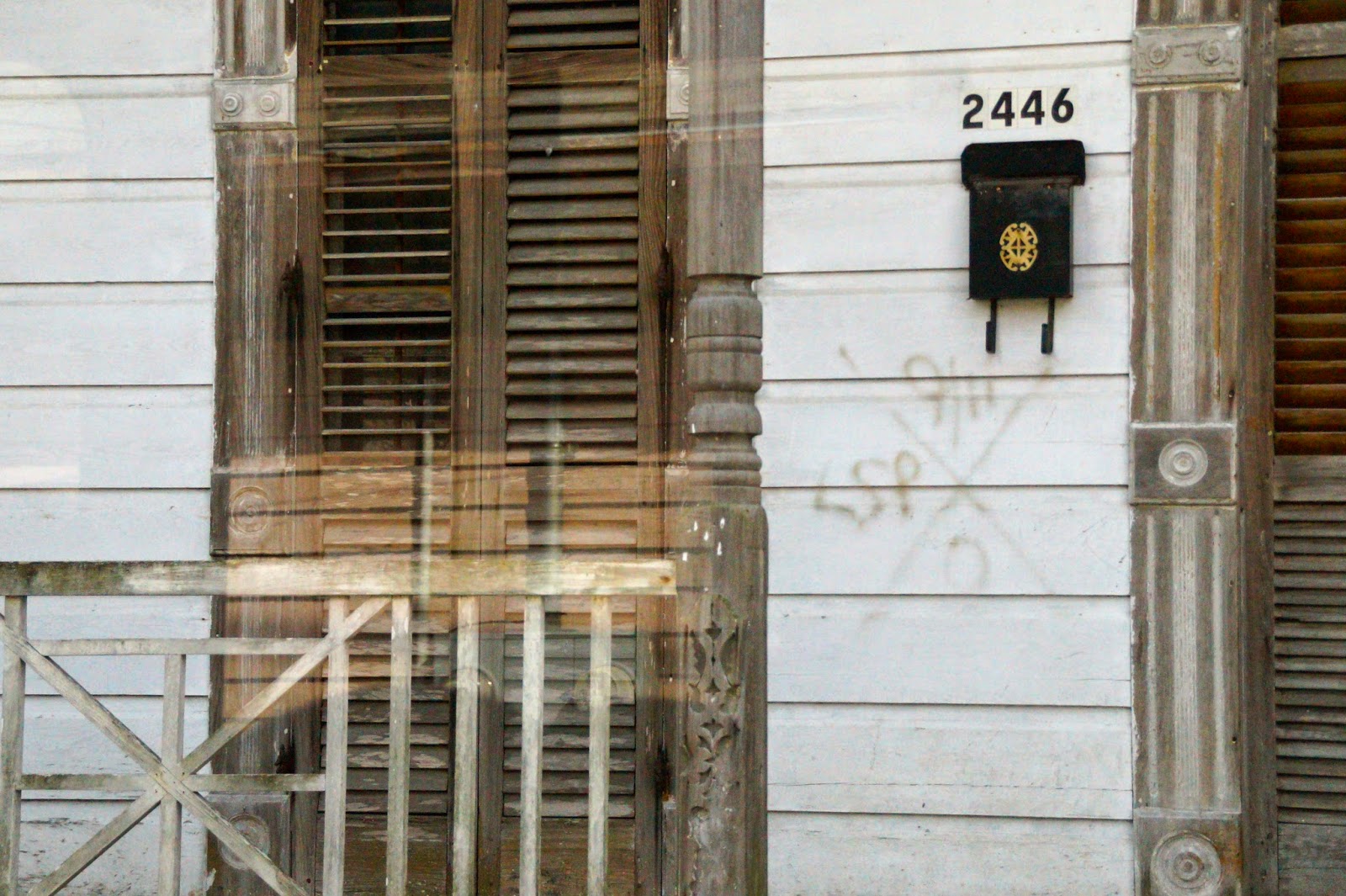
Much of the damage from Hurricane Katrina has been demolished or repaired. This home is one of a few where, just below the mailbox, the marks from the rescue team still show.

This magnolia provides a sense of hope for the future. Life prevails.

A shotgun house is typically 12 feet wide with rooms arranged behind each other and doors at each end of the house. There are archways between rooms which allows the breeze to flow through when the doors are open. Both of these are under repair from the Hurricane damage.


This Greek Revival Home has been renovated and cherished by its owners.


The French, Spanish and English have influenced New Orleans architecture for more than 300 years. The homes of the slaves were also distinctive. This photo through the bus window shows the slave quarters where the roofline always sloped towards the slave owner’s house.


Cemeteries in New Orleans are a popular tourist destination but many of them are crowded and it is difficult to get a sense of them. Our tour stopped at St Roch’s and we were able to respectfully understand the different styles of burial. The tombs may be used for many generations of a family.


The family has not maintained this tomb.


This sign explains the maintenance of the plots and tombs.


Originally all graves were above ground due to the ground water level. Now they may be buried underground such as this row with a new mound which has not yet settled.


The French Quarter is the heart of New Orleans.

The balconies with flower boxes

The music legends

The street musicians

Jackson Square and St Louis Cathedral

The street art

Bourbon Street

You don’t see these scenes anywhere else. Everyone needs to experience New Orleans at least once.


Sunday, March 1, 2015

#69 Feb 2015 New Orleans Mardi Gras!

We had many questions about the total Mardi Gras event and now have some insights.

Mardi Gras starts with Epiphany on January 6th and runs until Shrove Tuesday / Fat Tuesday / Mardi Gras day which is the day before Lent. Lent is 40 days before Easter so the duration of Mardi Gras changes each year.

The first parade in New Orleans was in 1857 with 2 floats by a “krewe” of 6 people assisted by 52 locals. The City of New Orleans now sanctions over 50 krewes, which is the name adopted for Mardi Gras parade groups. They are not for profit organizations whose only purpose is to host a parade and an official party during Mardi Gras. Every krewe is scrutinized by the city. The riders on the floats must be in costume with a full mask, hence, the very fanciful masks everywhere in the city.

Rex, the king of Mardi Gras, and his queen are the only people not masked during the parade.

The floats are owned by each crew and decorated by “Mardi Gras World” which has several warehouses around the city and internationally. We toured their warehouse and gained insight into the floats and parades.

We were fortunate to see the 2015 floats for Orpheus Krewe as they had not started to dismantle the decorations. The basic structures are reused each year.

Each krewe sets a theme for their parade and conveys their ideas to Mardi Gras World, which starts work on the floats the day after Mardi Gras. Each float is an artistic, engineering marvel. Overhead street lights limit the height.

The riders are secured onto the float by anchors such as the one by Ralph’s elbow. During the parade many people get overexcited and grab for throws.

Floats must be towed by a tractor such as this one, which has been enhanced to handle floats that may be seven or eight units long. There may be 30 people on each unit and they bring aboard up to 300 pounds of throws. Some floats have two levels of participants.

Floats can also be human, mule or horse drawn.

Dress up is encouraged during the tour.

Decorations were originally made from wire and paper Mache. Now they are constructed from styrofoam or fiberglass and covered with paper Mache, then painted. They may be changed and reused many times.


This is just over half the length of the warehouse full of floats from one krewe.

Another year we hope to return to experience Mardi Gras in New Orleans knowing what to expect.


#68 Feb 2015 Beginning the New Orleans Experience

When we realized our traveling would bring us to Louisiana during Mardi Gras we had mixed feelings. We had heard many stories about safety and security during the festivities. We chose an RV park an hour from New Orleans on the north side of Lake Pontchartrain.

This is the park in Robert LA. I’m sure it's a hive of activity in the summer.

There are two routes into New Orleans from the north shore of the lake. Going around the lake takes a few minutes longer but is along the swamps and bayous edging the lake.

The causeway across the lake is 24 miles long and is the longest bridge across open water in the world. There are six crossovers and one drawbridge for ships. There is a $3 toll going south into New Orleans with a view of downtown buildings.

We saw more signs of oil activity.

Heading north there is no toll going into smaller cities.

We both had colds so searched out a small, local parade in Covington on Mardi Gras day. Audience participation is expected.

It was just above freezing and windy so everyone was well bundled.


A marching band is a must.

As well as community organizations.

This krewe created the full Mardi Gras float.

The “throws” are loaded onto pegs for easy reaching.

Wednesday, February 25, 2015

#67 Feb 2015 How we travel!

When we pack up and head for a new destination we have a reservation in the next city. We look at a map of the state to get a general idea about what roads we will travel. Once we are on the road I enter the park into the GPS and off we go. We have discovered that the GPS directions into the park are not always accurate. We phone ahead to confirm directions to the park but we don’t usually have problems with the highway instructions.

February 12th was our 43rd anniversary. A few days before that Ralph was browsing through old email addresses and found Don's. Ralph sent an email, Don responded and it was if the years disappeared.

Ralph was Don’s best man, then a year later Don was Ralph’s best man. We were close friends with Don and Ivy for many years but as sometimes happens we drifted apart. We have had occasional contact but not seen one another for a few years.

Don went back to the beginning of our blog and caught up with our lives. He asked the following question.

So I am enjoying poking around your blog.
I note Ralph still rated ahead of the GPS in the early days of your retirement- I wonder if that still applies :)
Don


This was my answer.

Don,
The questions should be - Who does Ralph listen to - LINDA or the GPS?? Both are female voices.

A few days ago the GPS led us into unreasonable territory. I reviewed the next turns and they didn't seem to be taking us directly to our destination. I changed one parameter and let it re-calculate. Ralph kept driving and turning. Driving and turning. I kept asking him to stop and let the GPS catch up to our location. I kept asking him to stop. Ralph kept driving. I kept asking him to stop.

Finally Ralph stopped driving, I stopped asking and the GPS just plain stopped. She had no suggested turns.

I turned off the GPS and we all sat very quietly for a few minutes. Ralph got out and walked around until he could see street signs. I turned on the GPS and it agreed with Ralph about our location. On the road again!

Some days are bigger adventures than others. To answer your question - most of the time Ralph is ahead in the ratings.

Linda

Sometimes all the directions need updating.

The day of our anniversary Jamaica Beach Park was full so we headed for Louisiana.

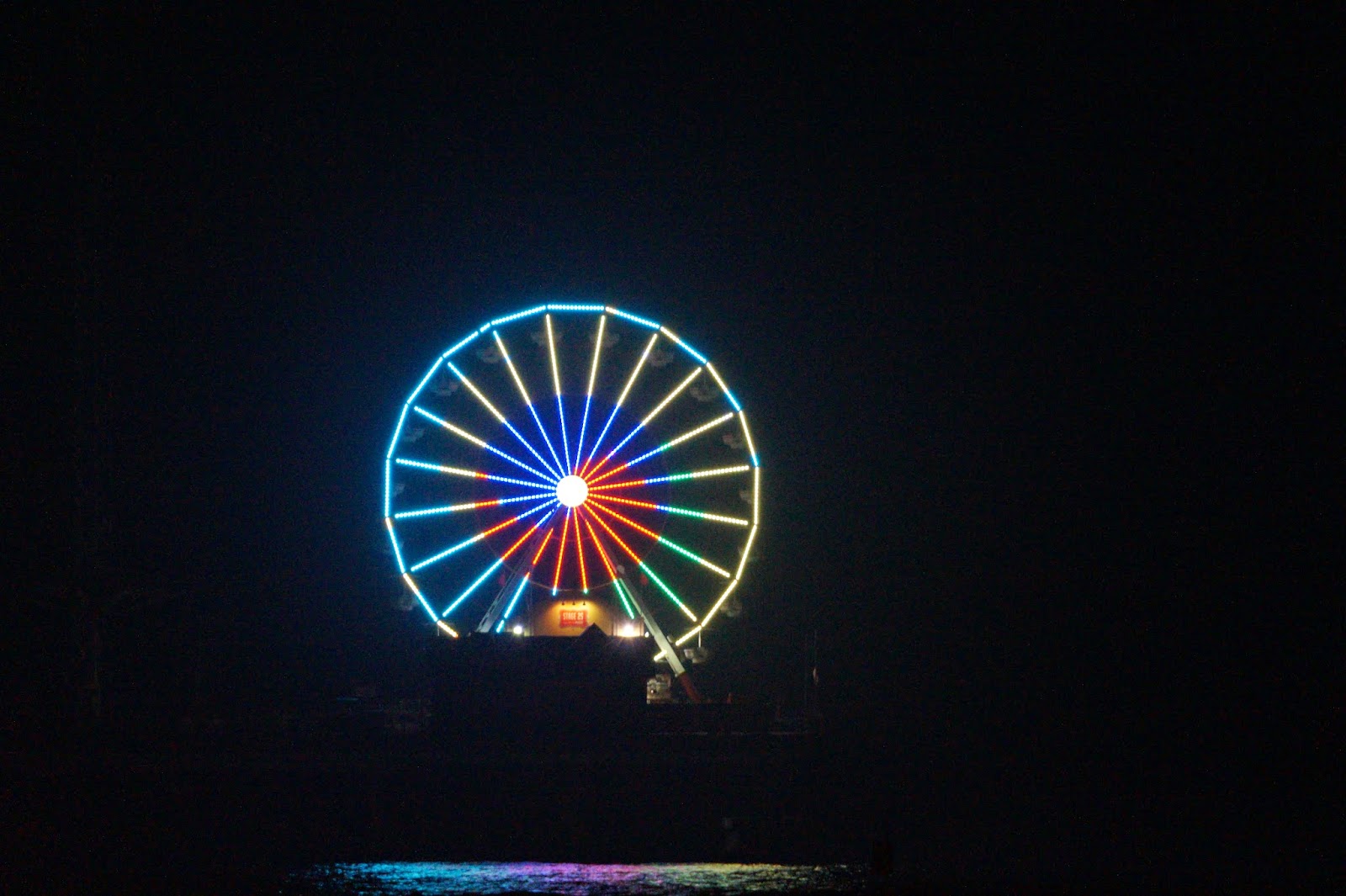
Pleasure Pier is an amusement park in Galveston. It’s apparently very colourful at night but was not open the weeknights we were there. Only the ferris wheel was lit.

Galveston Island can be accessed by causeway or ferry. We crossed the causeway coming into Galveston but the free ferry was more direct to Louisiana. The ride is only 15 minutes but provides a great view of all the action on and near the water. For the first time ever I sat in the driver’s seat while the RV was in motion – ferry motion but still motion.

It seems everywhere we look there is evidence of the oil and gas industry.

Ships and birds seem to go together.

As we traveled inland the countryside was still very flat. Many, but not all, houses were on stilts even higher than in Galveston. Here there is no sea wall to protect them.

Utility buildings are on stilts as well.


Some bridges are steeper than others.

Just after we entered Louisiana we HIT a hole in the highway that knocked pictures off the wall, broke dishes and rattled us. Later, when we told Al and Gail about that spot they said that was where they lost the hood on their RV. Ouch!

We were into swamps and bayous and miles of causeways above the water.


In Baton Rouge we crossed the Mighty Mississippi River. It is a very impressive working river.