Friday, October 21, 2016

#115 Jun 2015 Louisbourg Nova Scotia

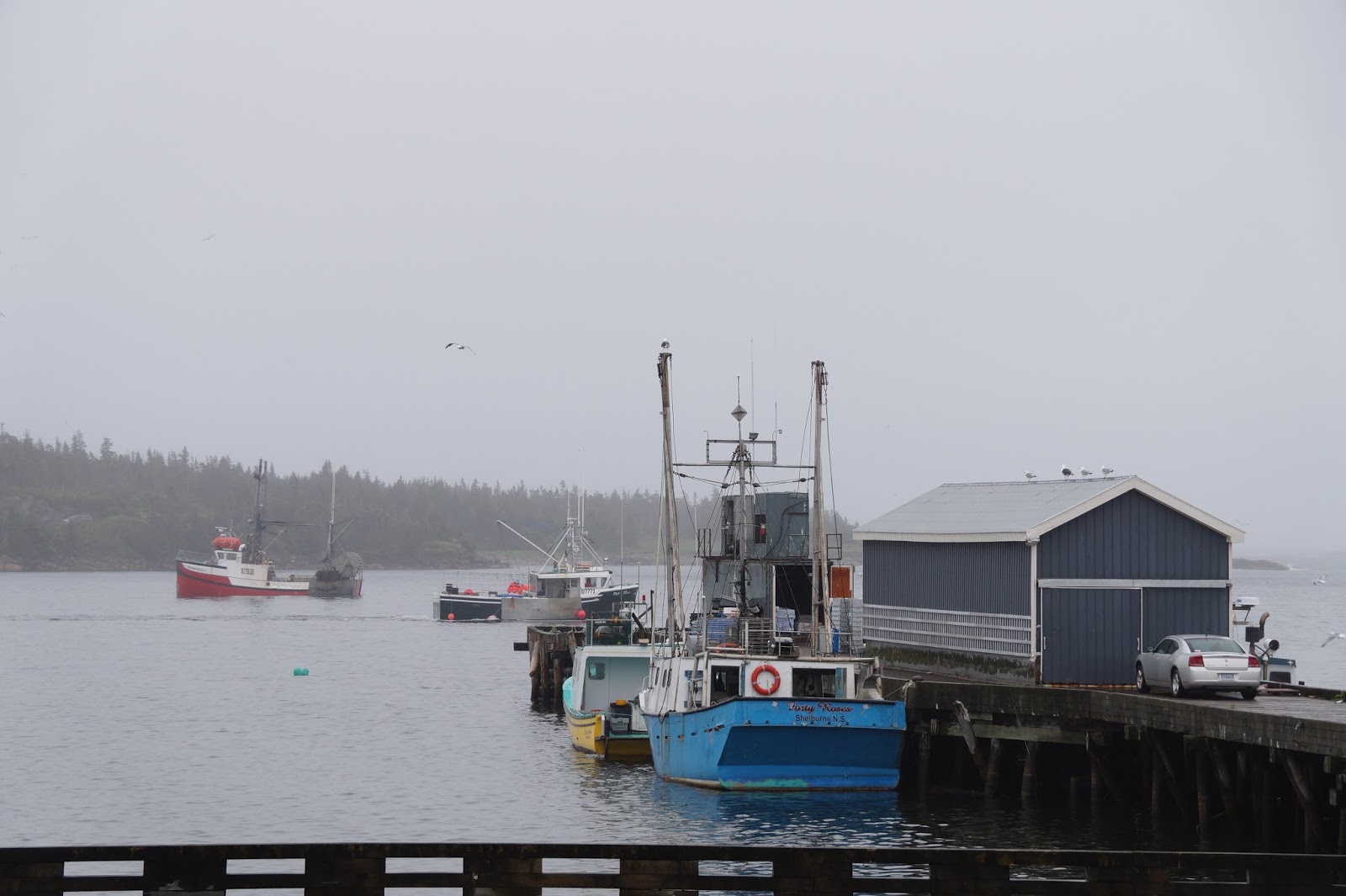
Our next stop was Louisbourg, Nova Scotia. Our RV Park site overlooked a local fishing pier.


Ralph asked at the front desk about local points of interest. He was directed to a small building beside the pier. For $30 he purchased 5 pounds of snow crab that had been cooked then flash frozen. Wow, what a treat! We defrosted enough for a feast and wiggled the rest into our freezer.


The history of Louisbourg has been largely shaped by its harbour. Well-protected, relatively deep and close to the fishing banks, the harbour attracted French settlers in the 1700s.


From 1713 to 1768, the fortified port of Louisbourg was very significant in the Franco-British struggles to expand their empires.


Many of the Fortress of Louisbourg buildings have been reconstructed and create a feeling of stepping back in time. 


Around each corner we encountered staff dressed in period costume. They were friendly and knowledgeable about daily life in a fortified town.


Tables were set and meals were prepared.


Genteel ladies plied their handiwork and created intricately designed lace.


The church was an integral part of everyone’s life.


The storehouse was stocked with many of the necessities of pioneer life as well as luxuries such as rum. Even today rum is stored and aged in barrels and sold locally.


In 1720 coal was discovered near Port Morien. Industries, power plants and individual homes along the eastern seaboard were dependent on the ships which delivered coal and returned with whatever cargo they could pick up.


By the 19th century ice-free Louisbourg became the winter export port for Cape Breton coal. Trains became a vital link for moving the coal and transporting the miners and families.


Cape Bretoners have persevered and changed with the times and the economy but the sea and its bounty are always at the heart of the community.


Saturday, October 15, 2016

#114 Jun 2015 Westward Ho Again

From St. John’s back to the ferry is 900 km on the Trans Canada, a two day trip. We arrived at Grand Codroy RV Park, Doyles NL in time to enjoy a car show and picnic. Friendly, local hospitality abounded.


A&W and Coca Cola seem to be a car show theme everywhere.


Traveling across Canada in this Alberta car would be fun.


We were sad to leave Newfoundland but knew more adventures awaited us.

One last view of a Newfoundland community and lighthouse.


We were on the ferry again.


 Then back to Cape Breton.


Wednesday, September 21, 2016

#113 Jun 2015 Lighthouses-A Mariners Ray of Hope!

Cape Spear Newfoundland is the most easterly point in North America. The next stop would be Ireland.


After five months of fabulous travel we left the coast still lovers and friends.


We saw beaches from sandy to rocky.


We saw the ocean from calm to stormy.


We saw big cities and tiny communities hugging the coastline.


After voyages, often of many weeks, North American lighthouses were welcome beacons to mariners from many nations as they vied for the riches of the New World.

The lighthouses were usually built with attached homes for the light keepers and their families. The homes were often the nicest ones in the community and the families were the most well off as the job provided the home.


The location of the lighthouses often meant isolation for the families and supplies were recieved infrequently.


The light keeper was well respected and often a community leader. His job maintaining the lighthouse could mean the difference between life and death for those who made their living from the sea.


Before modern communications the flags signaled critical information to the mariners.


We saw lighthouses with many colour and light sequences. Each is unique and has been a beacon for sailors for over 200 years along the coasts of North America.

Bonavista Lighthouse, Newfoundland


Cape Spear, Newfoundland


Point Amour, Labrador


Biloxi, Mississippi


St. Augustine, Florida


Bodie Island, North Carolina


Ralph climbed the 214 steps in the Bodie Island Lighthouse for this bird’s eye view.


Currituck Beach, North Carolina


Cape Hatteras, North Carolina – the tallest lighthouse in the USA


Louisbourg, Nova Scotia


Many lighthouses are no longer staffed. They are automated and now called light stations.

They often included foghorns, which are very eerie in the fog.


It was time to turn westward and start towards home.