Saturday, February 6, 2016

#107 Jun 2015 Awesome Icebergs!

The drive to Rocky Harbour provided a sample of the roads we had heard about in Newfoundland. Our next destination was about 350 km each way to St. Anthony, at the tip of the Northern Peninsula. We decided to leave the RV in Rocky Harbour so Ralph could fully enjoy the drive along the western coastline.

Rough water and the harsh coastline has challenged mariners for centuries. In 1919 the S.S. Ethie ran aground. All 92 passengers and crew were saved including a baby sent ashore in a mailbag. Time has eroded the hull leaving only rusted bits and pieces.


Hardy trees and shrubs cling to the shoreline.


We followed the “Viking Trail” to St. Anthony and checked into a hotel.

We promptly set out to find icebergs. “That was Easy”.


Every time the road meandered near the coastline there were icebergs. Wow!


In 1969 Ralph and I met at the Columbia Icefields near Jasper, Alberta. The turquoise color in the Athabasca Glacier has always stayed with us.


At that time Icefields tours were conducted in snowmobiles like this one in a Newfoundland woodlot.

When we came back from Europe in July 2010 we flew over Greenland. From 35,000 feet icebergs floating in a brilliant blue ocean mesmerized us. 10,000 year old Greenland glaciers calve fresh water icebergs. They float down Iceberg Alley along the eastern coast of Newfoundland.


Only about 1/8th of an iceberg is above water. Can you imagine how much of this behemoth is below water?

Icebergs may look serene but they can roll and split without warning. When they approach oil drilling operations they are lassoed and towed safely out of range.

In St. Anthony we booked an Iceberg Tour. Overnight a violent storm came in and knocked the end of the pier off its pilings.


A cavalcade of tourist vehicles headed for another pier and we were off for an adventure to see our first iceberg up close.


The ice is truly this turquoise colour.


The sun, wind, rain and ocean carve the icebergs into many fanciful shapes.


The boat crew fished out a growler from a nearby iceberg.


As we left St. Anthony Bight towards the open ocean we passed Fox Point Lighthouse.


A fishing boat attracted lots of airborne diners.

The storm from the previous night was still evident as we entered the North Atlantic Ocean. The crew expertly handled the boat in 20 to 30 foot waves.


We were early for the whale season but the alert crew spotted three gray whales in the heaving water.


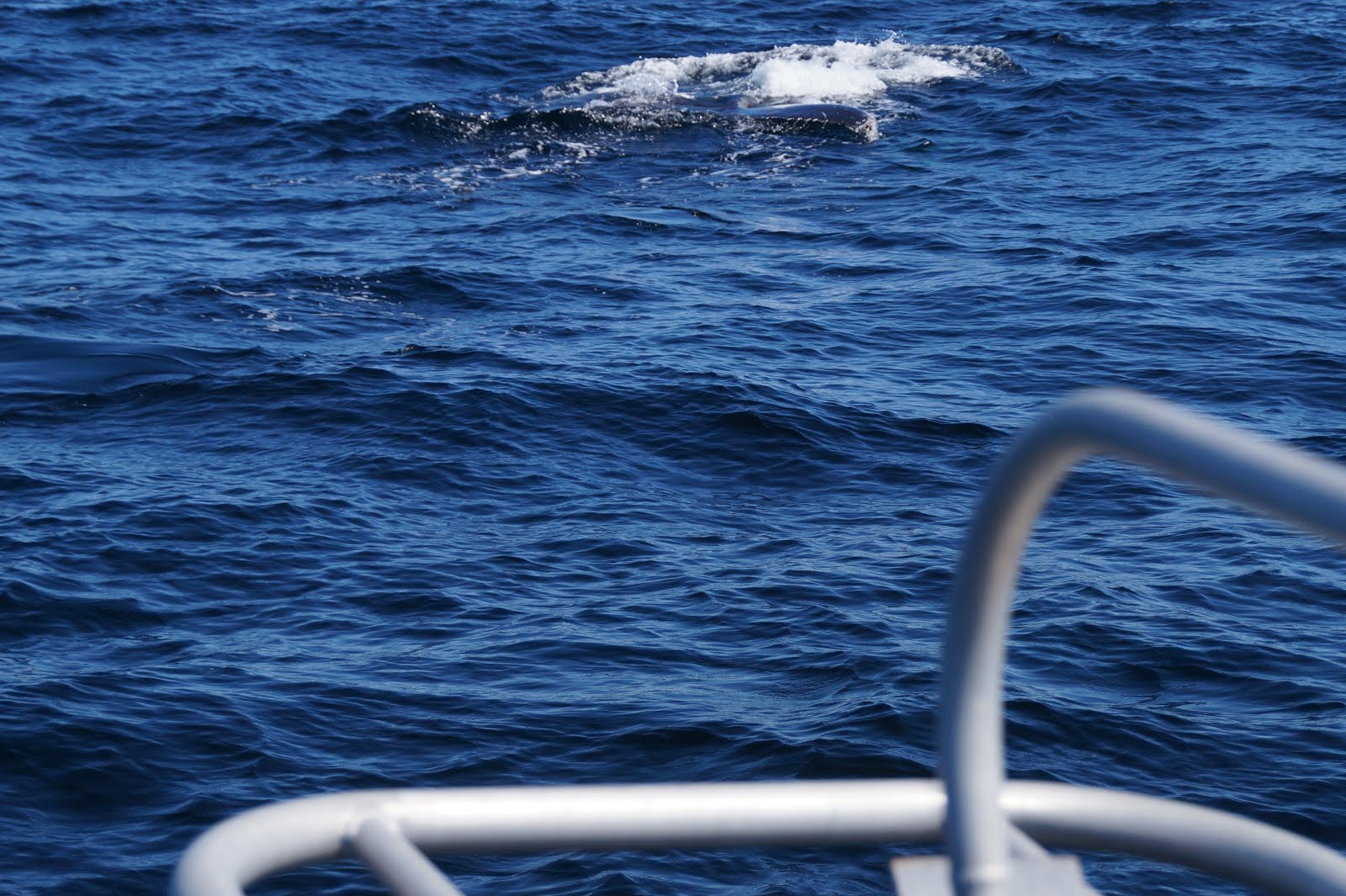
Ralph and I had an incredible view from the front of the boat as it confronted the waves. We hung onto the boat, each other and the camera.


What a ride! We were so excited by the icebergs, waves and whales we didn't notice how cold we were until we entered calm water.


At Jungle Jim's the name started to warm us up. For lunch we asked for the warmest table and hot chocolate.


Icebergs and fishing boats are a lasting image of Newfoundland.


Wednesday, February 3, 2016

#106 Jun 2015 This OLD Earth of Ours!

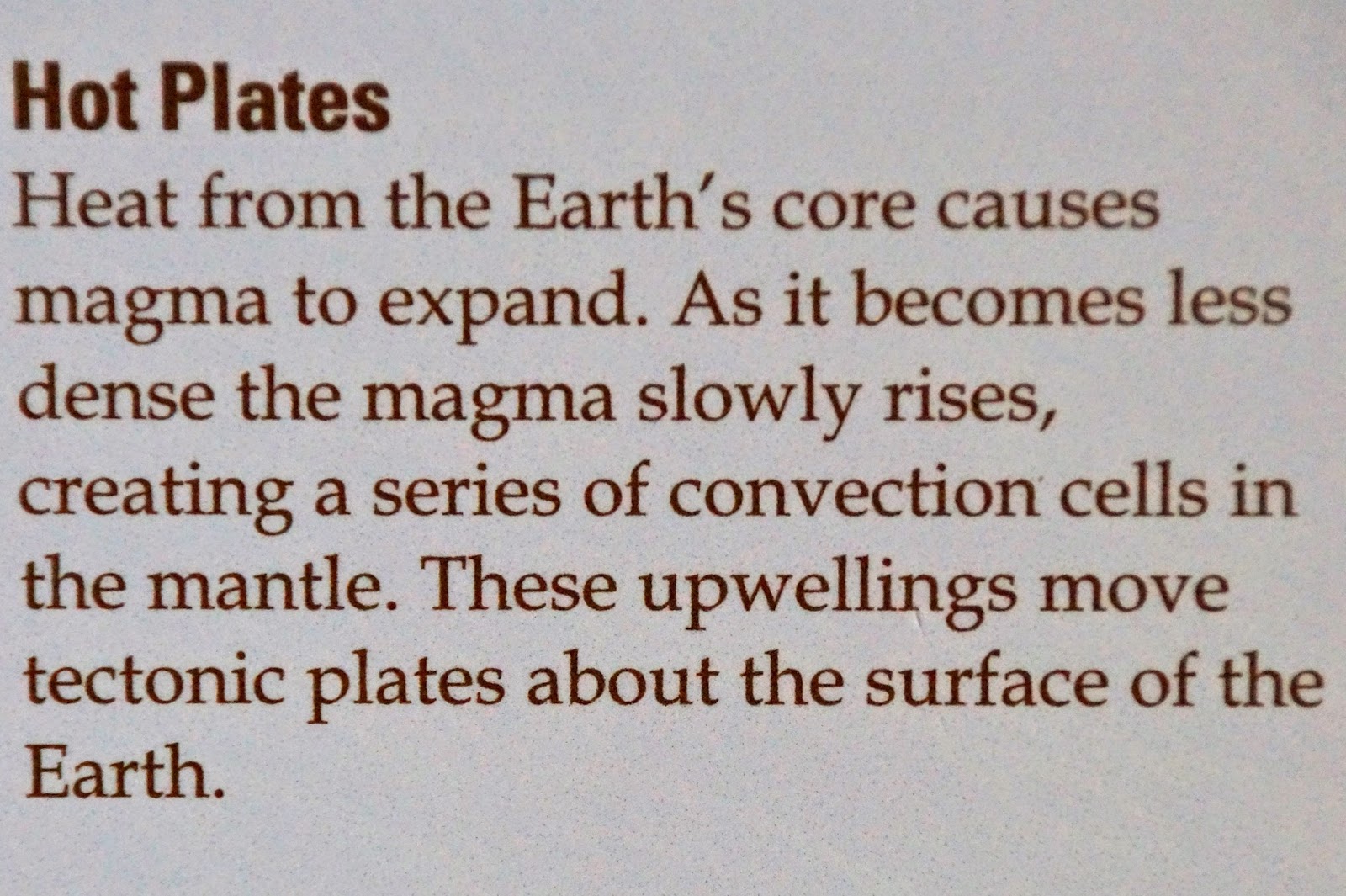
Gros Morne National Park takes you so far back in time that it’s incomprehensible. Hundreds of millions of years of tectonic upheaval are visible.


Turn around and you see the effects of ice ages only tens of thousands of years ago.


The Tablelands attracted our attention as we drove to the Discovery Centre. What are these orange mountains?


Tablelands rocks originated in the Earth’s mantle below the oceanic crust. They are part of the Appalachians, which we have encountered since the state of Georgia.

The Appalachians are part of what was once a huge continuous mountain chain that stretched for 4,000 km through eastern North America, Great Britain and Scandinavia. On the western side of the Appalachians are rocks of ancient North America, on the eastern side are rocks of Africa, and squashed in between are remnants of the Iapetus Ocean.


St. John NB Reversing Rapids are part of this upheaval. See our post #103.

The rocks of Gros Morne National Park formed in different parts of the Iapetus Ocean basin, hundreds of kilometres apart. They were moved into place as the ocean closed.


Sometimes known as the Accordion Effect, continents have repeatedly collided to form supercontinents, then pulled apart again and created new continents and oceans.

It was an awe-inspiring feeling to walk on the Earth’s Mantle.


At a distance the Tablelands appear to be a desert.


On closer inspection many of the rocks have a serpentine or snake like appearance.


Even in this environment dandelions persevere.

Sunday, January 31, 2016

#105 Jun 2015 Newfoundland - Unique and Distinctive

As we travelled towards the Maritimes we talked to many RVers about Newfoundland. Should we take the RV and have our own bed or book B&Bs and get to know more local people? We opted to take the RV, which meant we didn’t need to plan as far in advance and we could set our pace as we explored. That worked very well and our travel was relaxed and comfortable in our own bed.

As the ferry approached Port aux Basques, Newfoundland our first impression was of the very rocky terrain.


Up we went to the information centre, which stays open until the ferry arrives – regardless of the time. We were directed to Grand Codroy RV Park where we had a reservation. That office also stays open until all campers have arrived from the ferry. That was our first taste of local hospitality and a great start to our Newfoundland explorations.

Early June gave us long evenings and we began exploring neighbouring communities right away.


Churches and boats were everywhere.


Dusk was long and beautiful.

 
The next day our propane was not working. That was important as we were experiencing a taste of Newfoundland’s cool, rainy weather making the furnaces necessary.

In Cornerbrook we found a shop that checked out the propane system. They replaced the propane tank regulator and that problem was solved.

Next onto a Ford dealer to investigate the “check engine light”. The dealership was in a brand new building which was too small to accommodate the size of our RV. A technician came out to read the code but couldn't determine the cause. Ralph cleared the code with his reader and we crossed our fingers.

The dealership was on a narrow, dead end road. When we're towing the Suzuki we can't back up even an inch or two so Ralph unhitched in order to turn around.

Finally, we were off to our next stop in Rocky Harbour. The road was an adventure in itself. It was pockmarked with frost heaves and went from sea level to 1,000 feet and back again around sharp, often blind corners. Snow beside the road and heavy rain left Ralph exhausted when we arrived. 

Ralph’s comment was “It makes the Siskiyou Pass look like the highway between Surrey and Chilliwack“.

With sunshine the next day our world looked and felt much better. 


Nearby Lobster Cove Head Lighthouse is a treasure trove of history with many insights into the lives of lighthouse keepers and their families. It was a rugged, isolated life amid a small, tight knit community.


Before modern methods of communication signal flags were used to convey messages between land and sea.


Small, indomitable flowers survive despite the extreme weather from the Gulf of St. Lawrence.


In Rocky Harbour we experienced the fun and excitement of Newfoundland music and entertainment by "Anchors Aweigh" at the Ocean View Motel. We sang, hooted and laughed until our sides hurt!